


.svg)
Which Is the Best Solar Battery in Australia for an SA Home?
Finding the best solar battery in Australia is not a one-size-fits-all exercise, and for South Australian homeowners it is especially nuanced. SA households pay some of the highest electricity prices in the country, SA Power Networks is tightening flexible export changes in South Australia, and the federal Cheaper Home Batteries Program is now live, cutting the upfront cost of eligible batteries by thousands of dollars.
This article compares three of the most popular batteries our Adelaide teams install: the Tesla Powerwall 3, the Alpha ESS Smile series and the GoodWe Lynx Home F. We assess each one across the criteria that matter most to SA homeowners: usable capacity, backup capability, inverter integration, warranty and installed price after the federal rebate. By the end, you will have a clear picture of which battery suits your home and budget.
How to Compare Home Batteries: The Criteria That Actually Matter
Before looking at individual products, it pays to understand what the key specifications actually mean in practice. Battery marketing is full of headline numbers that can mislead buyers unfamiliar with the terminology. Here is what to focus on when evaluating any residential battery storage option for your Adelaide home.
Usable Capacity and Power Output
Every battery has two capacity figures: nominal capacity and usable capacity. Nominal capacity is the headline number printed on the brochure. Usable capacity is what you actually get to draw on, after the manufacturer reserves a buffer to protect the battery's chemistry and extend its lifespan. The gap between the two can be significant, so always compare usable kWh figures, not nominal ones.
To put this in context: a typical Adelaide home uses between 18 and 22 kWh of electricity per day. A battery with 10 kWh of usable capacity covers roughly half of an average night's load, which is a meaningful contribution but not whole-home independence. A larger system like the Tesla Powerwall 3, with 13.5 kWh usable, gets you closer to full overnight coverage.
Alongside capacity, check the continuous power output, measured in kilowatts (kW). This is the figure that determines which appliances can run at the same time during a blackout. A battery with 5 kW of continuous output can run a fridge, lights and a television simultaneously, but may struggle if you also want to run a ducted air conditioner. Higher continuous output gives you more flexibility during an outage.
Backup Capability and Inverter Compatibility
Not all batteries provide the same level of backup protection. Whole-home backup means the battery automatically switches your entire home to battery power the moment the grid goes down. Partial backup means only selected circuits, such as the fridge, lights and a few power points, are protected. Whole-home backup is more convenient but typically costs more to install, as it requires a transfer switch or a compatible hybrid inverter.
Inverter compatibility is a critical decision point, particularly if you are retrofitting a battery to an existing solar system. Some batteries, like the Tesla Powerwall 3, have a built-in inverter and can work alongside most existing solar setups. Others, like the GoodWe Lynx Home F, are designed to pair with a specific brand's hybrid inverter and deliver the tightest integration when the inverter and battery are from the same manufacturer. If you already have a GoodWe hybrid inverter, the Lynx Home F is a natural fit. If you are starting fresh, an all-in-one system may simplify the installation considerably.
Battery dispatch management also matters here. SA Power Networks' flexible export rules mean your system may be required to curtail solar exports at certain times. A well-integrated battery and inverter combination can respond to these signals automatically, maximising self-consumption rather than simply spilling excess energy onto a restricted grid.
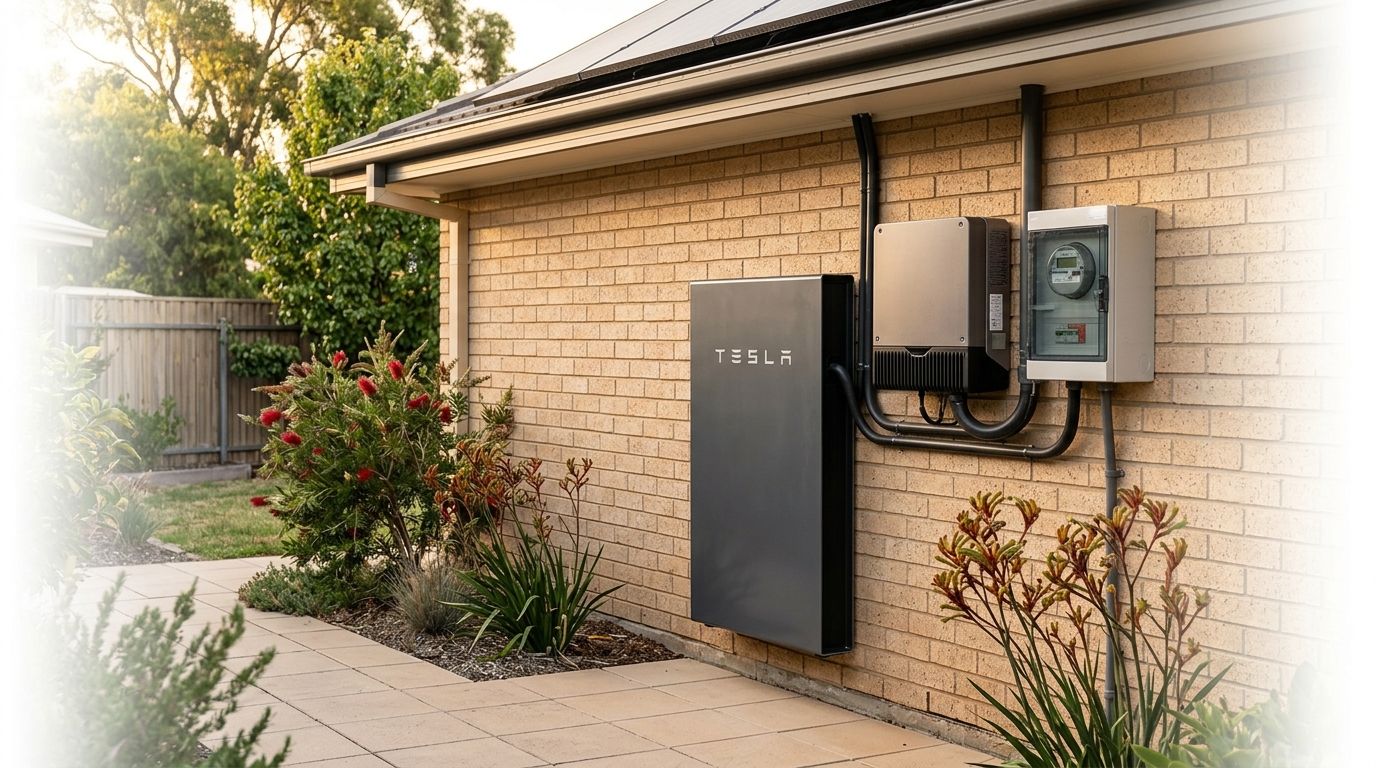
Tesla Powerwall 3 vs Alpha ESS vs GoodWe: Head-to-Head Comparison
Below is a side-by-side look at each battery across the specs and real-world factors that matter most to Adelaide homeowners. All three models are eligible for the federal Cheaper Home Batteries Program, so keep that in mind as you read through the pricing context.
Tesla Powerwall 3
The Tesla Powerwall 3 offers 13.5 kWh of usable capacity paired with a built-in 11.5 kW hybrid inverter, making it a true all-in-one unit rather than a battery that needs a separate inverter alongside it. That integration simplifies installation considerably and delivers whole-home backup capability, meaning your entire home switches to battery power automatically during a grid outage. Round-trip efficiency sits at an impressive 97.5%, which means very little energy is lost in the charge-discharge cycle.
The 10-year warranty is standard for the category, and the Powerwall 3 carries a premium price to match its premium specs. It works best as part of a new solar-plus-battery installation rather than a retrofit bolted onto an existing string inverter system, where the integration benefits are reduced. The federal rebate, currently $252 per usable kWh, takes a meaningful chunk off the upfront cost and brings the Powerwall 3 closer to mid-range competitors than the sticker price suggests.
Ideal for: homeowners installing solar and battery together for the first time who want a single integrated system with maximum backup capability. For a closer look at the full spec sheet and real-world performance, read our Tesla Powerwall 3 review.
Alpha ESS Smile Series
The Alpha ESS Smile series gives Adelaide homeowners genuine flexibility through its modular design. The Smile B10 (10 kWh) and Smile B5 (5 kWh) can be stacked together, so a household that starts with a single B10 can add a B5 or a second B10 later as their energy needs grow or their budget allows. Round-trip efficiency sits at around 90%, which is solid for the price point, and both models carry a 10-year warranty.
Alpha ESS batteries are compatible with a range of hybrid inverters, which makes them a strong retrofit option for homes that already have a compatible inverter installed. You are not locked into a single ecosystem. The brand has built a growing presence in the Australian market over the past few years, and our Adelaide teams have installed Alpha ESS systems across a wide range of home configurations, from compact townhouses to larger family homes with higher overnight loads.
Ideal for: cost-conscious homeowners or those adding storage to an existing solar system who want modular capacity and inverter flexibility. For a full breakdown of performance and pricing, see our Alpha ESS battery review.
GoodWe Lynx Home Series
The GoodWe Lynx Home F offers 10 kWh of usable capacity and is built to integrate tightly with GoodWe hybrid inverters. If your home is already running GoodWe solar equipment, the Lynx Home F slots in as a natural extension of that system rather than an add-on from a different ecosystem. The battery is backed by a 6,000-cycle warranty, which translates to well over a decade of daily cycling under typical Adelaide usage patterns.
Pricing is competitive, and the SEMS monitoring portal gives homeowners real-time visibility over solar generation, battery state of charge and grid import and export figures from a single dashboard. The trade-off is that the Lynx Home F delivers its best results when paired with a GoodWe inverter. Mixing it with a different brand's inverter is possible in some configurations, but you lose some of the integration advantages that make this battery stand out.
Ideal for: homeowners who already have or are installing a GoodWe hybrid inverter and want a well-integrated, value-for-money storage solution with strong cycle life.
How the Federal Rebate Affects the Price Gap
All three batteries qualify for the federal Cheaper Home Batteries Program, which is currently set at $252 per usable kWh as of early 2026 and is scheduled to reduce from May 2026 to approximately $6.8 per usable kWh STC factor. Because the rebate is calculated per usable kWh, larger batteries attract a larger dollar discount. The Powerwall 3's 13.5 kWh usable capacity earns a bigger rebate in absolute dollar terms than a 10 kWh unit, which narrows the installed price gap between the premium and mid-range options. Installed cost also varies depending on your home's switchboard configuration, roof layout and whether you need a new hybrid inverter, so a tailored quote is the only reliable way to compare final prices.
Which Battery Is the Right Fit for Your Adelaide Home?
Rather than naming a single winner, the more useful question is which battery suits your specific situation. Here are three common scenarios we see across Adelaide, and the battery that makes the most sense for each one.
Installing solar and battery together for the first time. The Tesla Powerwall 3 is the premium pick here. Its built-in 11.5 kW inverter means you are buying one integrated system rather than coordinating a battery, a hybrid inverter and a solar array from separate manufacturers. The higher upfront cost is offset partly by the federal rebate and partly by the fact that you are not paying for a separate inverter. If your priority is whole-home backup and a single point of accountability for your system, the Powerwall 3 is hard to beat.
Retrofitting a battery to an existing solar system. The Alpha ESS Smile B10 or Smile B5 offers the best combination of flexibility and value in this scenario. Its compatibility with a range of hybrid inverters means it can work alongside many existing setups without requiring a full system replacement. The modular design also lets you start with a smaller capacity and expand later, which suits homeowners who want to manage upfront costs carefully.
Already running GoodWe solar equipment. The GoodWe Lynx Home F is the straightforward choice. Pairing it with your existing GoodWe hybrid inverter gives you tight system integration, unified monitoring through the SEMS portal and a competitive installed price. There is no reason to introduce a second ecosystem when your inverter and battery can communicate natively.
One factor worth considering across all three scenarios is how the federal rebate interacts with battery size. Because the rebate is calculated per usable kWh, a larger battery earns a proportionally larger discount. SA's electricity tariffs are among the highest in the country, which means every kWh of stored solar energy you use instead of buying from the grid delivers a strong return. That combination of high tariffs and a per-kWh rebate can shift the value equation toward a larger battery than you might initially have budgeted for. Getting a quote that models your actual usage against each battery size is the best way to see where the numbers land for your home.
FAQ: Best Solar Battery Australia
What is the best solar battery for home use in Australia?
There is no single best solar battery for every Australian home. The Tesla Powerwall 3 suits homeowners installing solar and battery together for the first time, the Alpha ESS Smile series is a strong value-for-money retrofit option, and the GoodWe Lynx Home F is the natural choice for homes already running GoodWe inverters. The right battery depends on your existing setup, usable capacity needs and budget after the federal rebate.
Is the federal Cheaper Home Batteries Program available in South Australia?
Yes. The federal Cheaper Home Batteries Program is available to eligible SA homeowners and applies to all three batteries covered in this article. The rebate is calculated at $252 per usable kWh as of early 2026, which delivers a meaningful upfront discount on systems like the Tesla Powerwall 3 (13.5 kWh usable) and the GoodWe Lynx Home F (10 kWh). The rebate is scheduled to reduce from May 2026, so acting sooner locks in the higher discount.
How long does a home battery last in South Australia?
Most residential batteries carry a 10-year warranty and are designed to retain at least 70% of their original capacity over that period. The GoodWe Lynx Home F is backed by a 6,000-cycle warranty, which translates to well over a decade of daily use under typical Adelaide conditions. SA's high solar irradiance means batteries in this state tend to cycle frequently, so cycle life is a more meaningful figure than calendar years alone.
Does adding a battery improve my return on investment from solar?
In South Australia, where electricity prices are among the highest in the country, storing your own solar energy and using it at night rather than buying from the grid can significantly improve your overall return. The exact payback period depends on your battery size, daily usage patterns and the feed-in tariff you receive. A tailored quote that models your actual consumption against battery capacity is the most reliable way to calculate your expected return.
Get Expert Advice on the Best Battery for Your Home
There is no single best solar battery for every Adelaide home. The right choice comes down to your existing solar setup, how much energy your household uses overnight, your backup requirements and your budget after the federal rebate. What is clear is that 2026 is one of the strongest years on record to add battery storage, with the Cheaper Home Batteries Program delivering thousands of dollars off eligible systems. The rebate reduces from May 2026, so the sooner you move, the more you save.
Our Adelaide team has installed solar and battery systems across the city and can model your actual usage against each option to show you where the numbers land. To speak with a local expert or see the Tesla Powerwall 3, Alpha ESS Smile series and GoodWe Lynx Home F in person, find your nearest Adelaide showroom and book a free consultation today.


