


.svg)
DC Coupled vs AC Coupled: What the Terms Actually Mean
Adelaide homeowners adding battery storage to their solar system face a fundamental choice before any hardware is selected: dc coupled vs ac coupled architecture. The decision affects efficiency, cost, compatibility and how well your system performs during a blackout. Getting it right from the start saves you money and headaches down the track.
To understand the difference, you need to know what DC and AC actually mean. DC stands for direct current, the type of electricity that flows in one direction at a constant voltage. AC stands for alternating current, which reverses direction many times per second and is the standard format used by the electricity grid and most household appliances.
Solar panels produce DC power. The grid runs on AC. Batteries also store energy as DC. The 'coupling' term simply describes where in the energy flow the conversion between DC and AC happens. That single design decision has a significant knock-on effect for system efficiency, hardware requirements and how easily you can expand your storage in the future.
How DC Coupled Solar Battery Systems Work
In a DC coupled system, the energy flow is straightforward. Solar panels generate DC electricity and send it directly to a hybrid inverter, which manages both the solar input and the battery charging in a single unit. The battery charges from DC power without any intermediate conversion to AC, and the hybrid inverter only converts energy to AC once it is ready to supply your home or export to the grid.
That single conversion step is the defining feature of DC coupling. Compare it to a system where solar energy is converted to AC first, then converted back to DC to charge the battery, and you can see immediately where efficiency is lost. Every conversion step generates a small amount of heat, and that heat represents energy that never reaches your battery or your appliances.
For Adelaide homes, where clear skies and high solar irradiance mean panels are generating at or near peak output for long stretches of the day, maximising charging efficiency is genuinely valuable. Even a few percentage points of extra efficiency compounds across thousands of charging cycles over the life of the system.
DC coupling is the standard architecture for new solar-plus-battery installations and is also the dominant design for off-grid systems, where every watt of generated energy needs to be captured and stored as effectively as possible.
Advantages of DC Coupling
The headline benefit of DC coupling is round-trip efficiency. Because energy passes through fewer conversion stages, a well-designed DC coupled system typically achieves 95% or better round-trip efficiency from panel output to usable power at your switchboard. That means less energy wasted as heat and more kilowatt-hours available to run your home or export to the grid.
For new installations, DC coupling also simplifies the hardware setup. A single hybrid inverter handles both the solar array and the battery, which keeps the equipment footprint smaller and the installation cleaner. Popular options for Adelaide residential systems include the Sungrow SH Series hybrid inverter paired with the SBR battery, where both units communicate natively and are managed through a single app. The GoodWe ET Series hybrid inverter paired with the Lynx Home battery is another strong choice, offering a fully integrated GoodWe ecosystem that suits most Adelaide residential system sizes.
Having one inverter also means one manufacturer warranty, one monitoring platform and one point of contact if something needs attention. That simplicity has real value over a 10-year-plus system lifespan.
DC coupled systems also perform well during grid outages. A quality hybrid inverter can provide black-start capability, meaning it can power your home directly from the battery and solar panels even when the grid is down, without needing an external signal to restart.
Limitations of DC Coupling
The main constraint with DC coupling is compatibility. The battery must be matched to a compatible hybrid inverter, and the two units are typically sold and warranted as a paired system. If you already have a working string inverter on your roof, adding a DC coupled battery almost always means replacing that inverter entirely, which adds cost and waste to what might otherwise be a straightforward residential battery storage upgrade.
There is also a capacity ceiling to consider. The hybrid inverter's DC input rating sets an upper limit on how much battery storage can be connected to it. If you want to significantly expand your storage in the future, you may find the inverter becomes the bottleneck before the battery bank reaches the size you need. It is worth discussing your long-term energy goals with your installer before committing to a specific hybrid inverter model.
How AC Coupled Solar Battery Systems Work
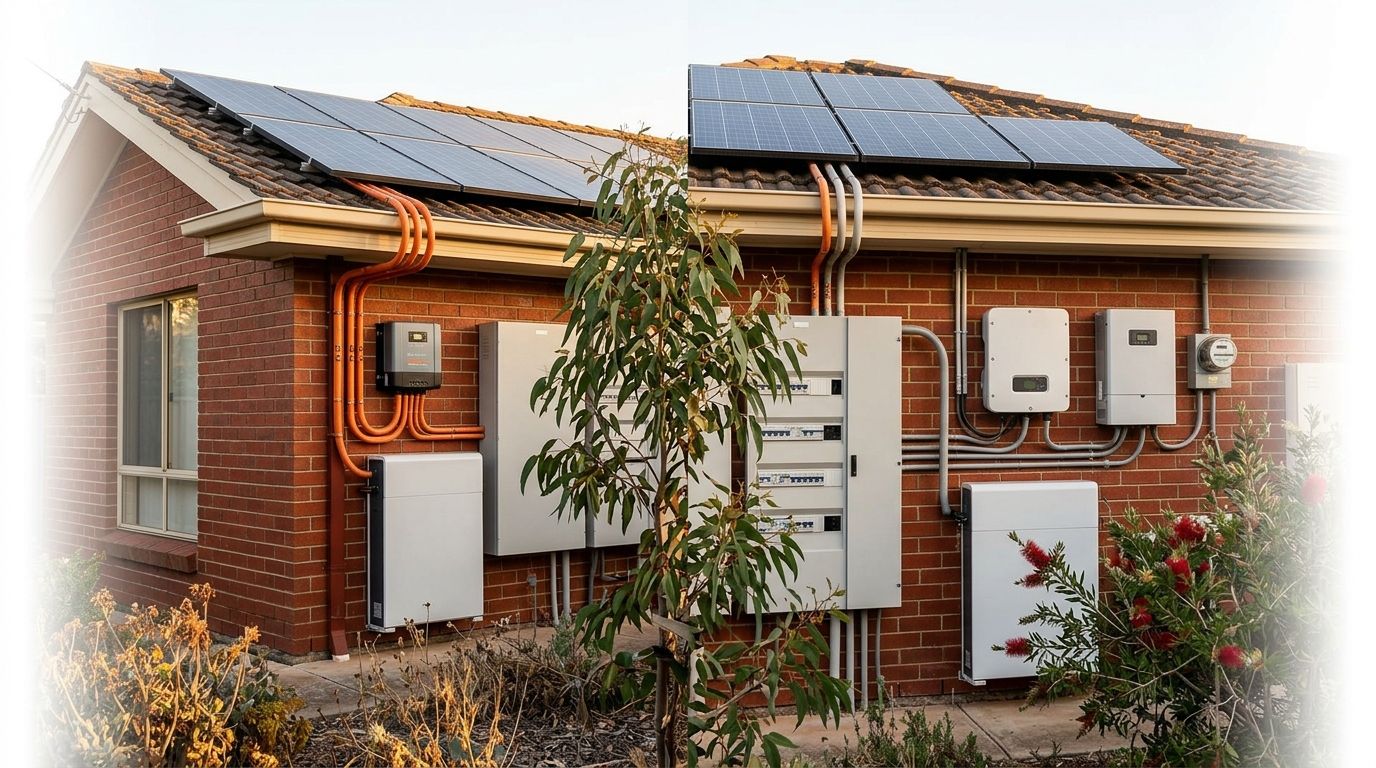
An AC coupled system takes a different path through the energy conversion process. Your solar panels still generate DC electricity, and your existing solar inverter converts that DC to AC as it normally would. But instead of stopping there, that AC power is then fed into a separate battery inverter, which converts it back to DC so it can be stored in the battery. When you draw on the battery later, the battery inverter converts the stored DC back to AC again for use in your home.
That extra conversion step is the defining characteristic of AC coupling. The energy goes from DC to AC and then back to DC before it ever reaches the battery. Each conversion introduces a small efficiency loss, and across a full charge-discharge cycle, AC coupled systems typically lose around 5 to 10% more energy than a comparable DC coupled setup. For Adelaide homes generating large volumes of solar energy through summer, that difference is worth factoring into your long-term savings calculations.
The real strength of AC coupling is compatibility. Because the battery system connects to your home's AC switchboard rather than to the solar inverter itself, it can work alongside virtually any existing solar setup regardless of brand, age or inverter model. That makes AC coupling the practical choice for the large number of Adelaide homeowners who already have solar and want to add storage without touching their existing equipment. If you want to understand how string inverters vs hybrid inverters differ in this context, that comparison is worth reading before you decide.
Advantages of AC Coupling
The most significant advantage of AC coupling is retrofit flexibility. Because the battery system connects at the AC switchboard level, it is compatible with any solar inverter brand or age. You do not need to replace a perfectly functional inverter just to add storage, which can save $1,500 to $3,000 or more on hardware and installation costs.
AC coupled batteries can also be sized independently of the solar array. The battery inverter's capacity does not need to match the solar inverter's output rating, giving you more freedom to choose a storage size that suits your household energy use rather than being constrained by existing hardware specifications.
The Tesla Powerwall 3 is a strong example of AC coupling done well. It includes its own built-in inverter, connects directly to the AC switchboard and works alongside any existing solar system without modification. For Adelaide homes with larger solar arrays where daytime self-consumption is already high, an AC coupled battery like the Powerwall 3 can be installed quickly and starts delivering value from day one.
Limitations of AC Coupling
The efficiency trade-off is the most honest limitation to acknowledge. That 5 to 10% additional loss from double conversion is not catastrophic, but it does mean slightly fewer kilowatt-hours available from the same amount of solar generation compared to a DC coupled system.
Running two separate inverters also adds complexity. Your original solar inverter and the battery inverter may come from different manufacturers, use different monitoring apps and carry separate warranties. If something goes wrong, diagnosing the fault can involve two different support channels. Off-grid and backup power configurations can also be more involved to set up correctly with an AC coupled system, since the two inverters need to be configured to work together during a grid outage rather than operating as a single integrated unit.
DC Coupled vs AC Coupled: Which Should Adelaide Homeowners Choose?
The right answer depends almost entirely on your starting point. Are you installing solar and batteries together for the first time, or do you already have solar panels on your roof and want to add storage? That single question determines which architecture makes the most sense for your home.
Adelaide's high solar irradiance is worth keeping in mind throughout this decision. With more peak sun hours than most Australian capital cities, even a small efficiency difference between coupling types adds up meaningfully over a year. A system that captures and stores 5% more of your solar generation each day compounds into a noticeable difference in your electricity bill by the end of a 12-month period, and a very significant one over a 10-year system lifespan.
New Installations: Go DC Coupled with a Hybrid Inverter
For new solar-plus-battery installations, DC coupling via a hybrid inverter is almost always the better choice. You get higher round-trip efficiency, a single integrated system to manage and typically a lower total installed cost compared to buying a string inverter and a separate battery inverter.
The Sungrow SH Series hybrid inverter paired with the Sungrow SBR battery is one of the most popular DC coupled packages installed by Best Solar & Batteries in Adelaide. The two units communicate natively, are managed through a single platform and are available in a range of sizes to suit most residential systems. The GoodWe ET Series hybrid inverter paired with the GoodWe Lynx Home battery is another strong option, offering a fully integrated ecosystem that suits Adelaide residential systems from around 6.6kW upward.
A single integrated system is also simpler to manage under SA Power Networks flexible export rules. Many hybrid inverters handle export limiting automatically through built-in software, removing the need for a separate export limiting device and reducing the administrative burden of compliance. That is a meaningful practical advantage for Adelaide homeowners navigating those requirements.
Retrofitting Storage to Existing Solar: AC Coupling Makes Sense
If you already have a working solar system and replacing the inverter is not practical or cost-effective, AC coupling is the smart path forward. There is no need to discard functioning equipment, and the battery system can be added without disrupting your existing solar generation at all.
The Tesla Powerwall 3 is the leading AC coupled retrofit battery for Adelaide homes. It includes a built-in inverter, connects to your home's AC switchboard and works alongside any existing solar inverter regardless of brand or age. Installation is straightforward, and the Powerwall 3's backup capability means your home can continue running on solar and battery power during a grid outage. The Alpha ESS Smile5 is another AC coupled option worth considering for retrofit scenarios, particularly where a more modular storage capacity is preferred.
The key trade-off to accept with an AC coupled retrofit is the efficiency loss from double conversion. For most homeowners, the cost of replacing a functional inverter outweighs that efficiency gap, making AC coupling the better financial decision even if it is not the most efficient architecture on paper.
Ready to Add Battery Storage to Your Adelaide Home?
The core takeaway from this comparison is straightforward. DC coupling is the more efficient choice for new solar-plus-battery installations, while AC coupling is the practical, cost-effective path for retrofitting storage to an existing solar system. Neither architecture is universally superior. The right answer depends on your current setup, your budget and what you want your system to achieve over the long term.
Every Adelaide home is different. The age of your existing inverter, the size of your solar array, your household energy use patterns and your goals for backup power all influence which coupling approach will deliver the best return. Getting that assessment right before you commit to hardware is the most valuable step you can take.
The team at Best Solar & Batteries can inspect your existing system, review your energy bills and recommend the most suitable coupling approach for your specific situation. Whether that means a Sungrow SH Series or GoodWe ET Series hybrid inverter for a new installation, or a Tesla Powerwall 3 retrofit alongside your current solar setup, the advice is tailored to your home, not a generic recommendation. Get a free solar and battery quote today and find out which option makes the most sense for you.
Frequently Asked Questions
How do I know if my solar is AC or DC-coupled?
You can tell whether your solar system is AC or DC-coupled by checking your inverter setup. If you have a single hybrid inverter with a dedicated battery port or DC terminals where the battery connects directly, your system is DC coupled. If your battery has its own separate inverter and connects to your home's AC switchboard or meter board, it is AC coupled. Check your inverter model number and look up its specifications, or call Best Solar & Batteries for a free system check.
Is Sungrow AC or DC-coupled?
Sungrow offers both AC and DC-coupled options depending on the product range. The Sungrow SH series hybrid inverters are DC coupled, pairing directly with Sungrow SBR battery modules via a DC connection. For most new Adelaide installations, the DC-coupled SH hybrid inverter range is the recommended choice. Best Solar & Batteries installs Sungrow systems and can advise on the right model for your specific setup.
Is Powerwall 3 AC or DC-coupled?
The Tesla Powerwall 3 is an AC-coupled battery storage system. It includes a built-in inverter and connects to your home's AC switchboard, making it compatible with virtually any existing solar inverter brand. This flexibility is one of the main reasons the Powerwall 3 is a popular retrofit choice for Adelaide homeowners who already have solar panels installed. Read our full Tesla Powerwall 3 review for a detailed breakdown of its performance and value.
What is the difference between AC and DC connectors?
AC and DC connectors differ in the type of current they carry and where they are used in a solar system. DC connectors, such as the MC4 connectors used between solar panels, carry direct current at high voltage and are weatherproof and polarised to prevent incorrect wiring. AC connectors carry alternating current and are the standard plug-and-socket or hardwired connections used throughout your home's electrical circuits. In a solar battery system, DC connectors link the panels to the inverter or charge controller, while AC connectors link the inverter output to your switchboard and the grid.


